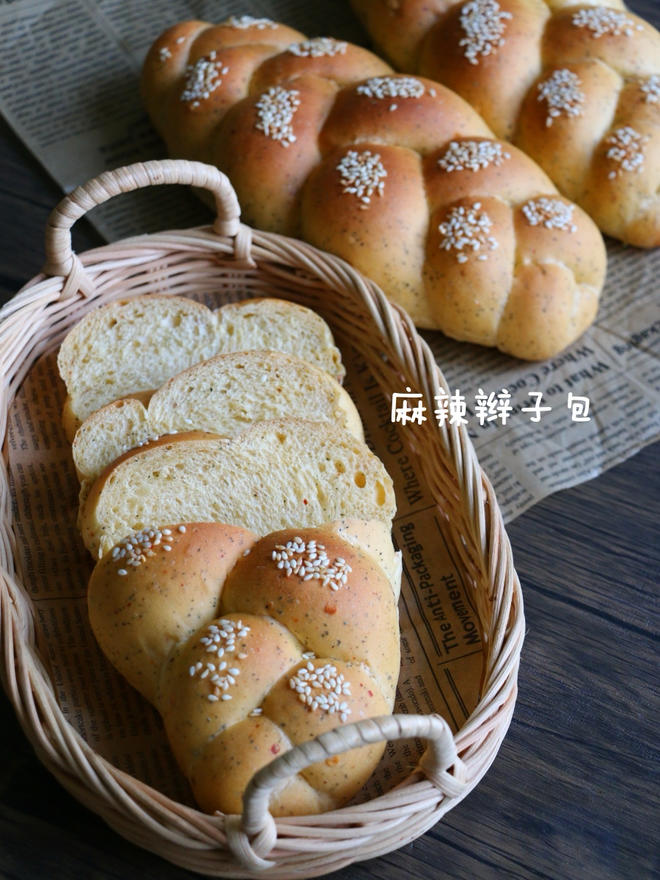
High-Gluten Flour
1️⃣ Scald Method: 100g flour, 100g boiling water, mix evenly, cool, then freeze for 30 minutes or refrigerate overnight.
Why the Scald Matters
The scald is the whole point of this dough. Pouring boiling water over a portion of the flour pre-gelatinizes its starch, and that gelled paste then holds on to water for the life of the bun. In practice it means a crumb that stays soft and slightly stretchy on day two and day three instead of drying out, and a dough that rolls out without springing back — which matters when you are shaping sixteen small pieces back to back.
Cooling the scald before mixing is not an optional detail either. Fold it in warm and the finished dough temperature climbs, the butter greases out, and the yeast races ahead of you. Freezing for 30 minutes or resting it in the fridge overnight both bring it properly cold, keeping the dough in the 75-79°F (24-26°C) range after kneading.
Tips for the Best Result
- Press the scald flat in a shallow dish so it cools quickly and evenly instead of sitting as a hot lump in the middle.
- Knead to a smooth, elastic dough before the first rise; the scald makes full gluten development easier to reach than in a straight dough.
- Once divided into 60g pieces, keep the rounded balls covered — this dough skins over fast, and skinned spots will not seal around filling.
- Leave a narrow border free of coconut filling when rolling, or it squeezes out the ends and burns on the tray.
- Give the egg wash a thin, even coat; a thick puddle leaves pale patches underneath.
- Start checking at 14 minutes of the 16. Deep golden tops mean done even if your oven runs a touch slow or fast.
Variations to Try
The pandan coconut filling is only one branch of this dough. The same 60g portions take well to other treatments once the roll-flat-fill-roll routine is in your hands:
- Plain sweet coconut: drop the pandan and add a spoon of condensed milk to the filling mixture.
- Garlic herb buns: shape plain rounds and brush them with garlic butter the moment they leave the oven.
- Cheesier hot dogs: lay a strip of mozzarella beside the sausage before rolling for a melted center.
- Sealed jam buns: wrap the filling fully inside, pinch the seam firmly underneath, and egg wash for a glossy dome.
How to Freeze and Reheat
Cool the buns completely on a rack before storing, so condensation does not soften the crusts. From there:
- Room temperature, sealed bag: best within two days.
- Frozen: freeze solid in a bag for up to a month. Thaw at room temperature, then 320°F (160°C) for 5 minutes to bring back the just-baked softness.
- Hot dog buns are better assembled fresh — reheat the plain baked buns first, then pipe the mayonnaise and ketchup.
Two Common Questions
Can I skip freezing the scald? The freezer is only there to cool it down fast. Refrigerating overnight achieves exactly the same thing, so use whichever fits your schedule.
My kitchen is cold and the 50-minute proof is clearly not enough. Now what? Find the warmest spot you have — an oven with just the light on usually lands near 82-86°F (28-30°C) — and judge by look, not minutes: puffy, roughly 1.5 times bigger, and jelly-like when the tray is nudged.