250g (Rectangular) ×4
Dough Bread Flour: 600g Granulated Sugar: 18g Salt: 10.8g Fresh Yeast: [Quantity Unspecified]12g Malt Extract (Optional) 3g Pumpkin Puree 450g Water 115g Butter 12g
Scalded Dough
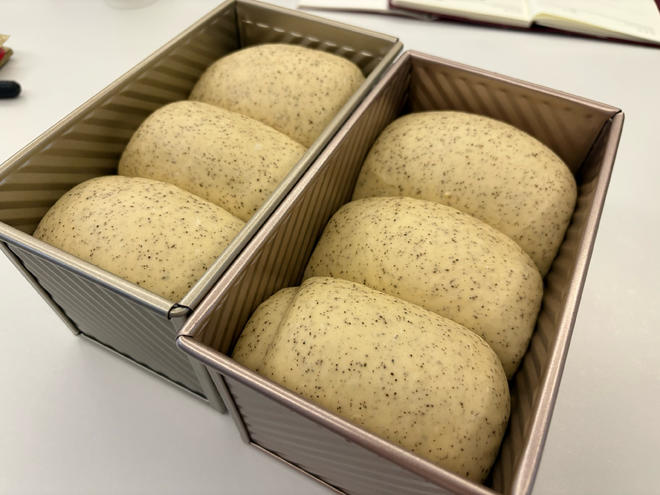
60g Supplementary Ingredients ① Steamed Pumpkin (recommended to prepare the night before making bread): Peel and cut the pumpkin into pieces, steam until soft, then cool. Please prepare it one day in advance as much as possible and refrigerate or freeze as needed. If steaming a large quantity at once, it can be portioned and frozen. Post-Oil Mixing Method: Weigh all ingredients except butter from the dough ingredients and place them into the stand mixer bowl. Mix at low speed (gear 1) for about 1 minute until no dry flour remains, then increase speed to gear 6 for kneading. As the dough mixes and gluten gradually develops, a relatively thick and large membrane can be pulled. Add softened butter and knead at gear 3 for about 1-2 minutes to incorporate the butter into the dough. Once the butter is fully incorporated, switch to gear 6 and continue kneading until the dough reaches the expansion stage, forming a relatively transparent and highly extensible membrane. The dough temperature after mixing should be around 24°C. Remove the dough, shape it, and place it into a container. Place the dough into a proofing box set at 28°C with around 75% humidity for primary fermentation. The primary fermentation takes about 60 minutes, during which the dough should expand to about 2 to 2.5 times its original volume.5x; Fold and flip note: Take out the fermented dough, dust with dry flour to prevent sticking, then fold and flip the dough from the top, bottom, left, and right sides like folding a quilt. Place in a container and continue fermenting at 28°C for 30 minutes. Take out the dough, divide into portions of about 310-320 grams each. Fold and tighten, shape into rounds, place in a proofing box at 28°C with 75-80% humidity, and rest for 20 minutes. Take a rested dough piece, tuck in the sides from both ends, gently pat from the center upward and downward with the palm to release large air bubbles. Flip over, roll up from top to bottom, and press the seam to seal tightly. Place the seam side down, shape both ends, and place into a toast mold. Ferment in an environment at about 32°C with 80% humidity. Remember to preheat the oven and steam. Ferment until 90% full or more.
Place the bread loaf tin on an SN baking tray inside the preheated Gupik flatbed oven. Steam for 6 seconds, then bake at 190°C top heat and 260°C bottom heat for 22-23 minutes. Note: Adjust the temperature up or down by 10°C based on actual baking conditions. For the same mold, baking tray, and quantity as the SP50 or AC90, follow the above settings. If not using a baking tray underneath, reduce the bottom heat setting. For a home oven, it is recommended to bake at 190°C top heat and 230°C bottom heat. After removing from the oven, tap the mold to release steam, then unmold. Allow to cool completely before slicing.
Working with Variable Pumpkin
Not all pumpkin puree carries the same water. The 115 grams of water in the formula assumes a fairly thick steamed puree, so a wetter batch, or puree thawed from frozen that has wept in the bag, will push the dough toward sticky. Hold back 15 to 20 grams of water on the first mix if your puree looks loose, then trickle it in only if the dough rides stiff. Properly hydrated, the dough is tacky but clears the bowl walls cleanly.
Adapting the Bake to a Home Oven
The steam and the split top and bottom temperatures assume a deck oven. In a home oven, the suggested 375°F top and 445°F bottom (190°C and 230°C) works with the tin set on the middle rack, and steam can be faked: preheat an empty metal pan on the rack below and pour in half a cup of hot water as the loaves go in. If the bases color too quickly, slide a spare baking sheet onto the rack beneath for the rest of the bake.
Why Full Cooling Matters
Cut a warm pumpkin loaf and the knife drags through gummy, compressed crumb, because the starch is still setting and steam is still escaping. Two hours of cooling, or three for a tall loaf, changes the texture completely. Saw with a serrated knife and let the teeth do the work; pressing down squashes all that careful hydration in one stroke.