
All-purpose flour: 300g
Yeast: 3g
Butter 8g
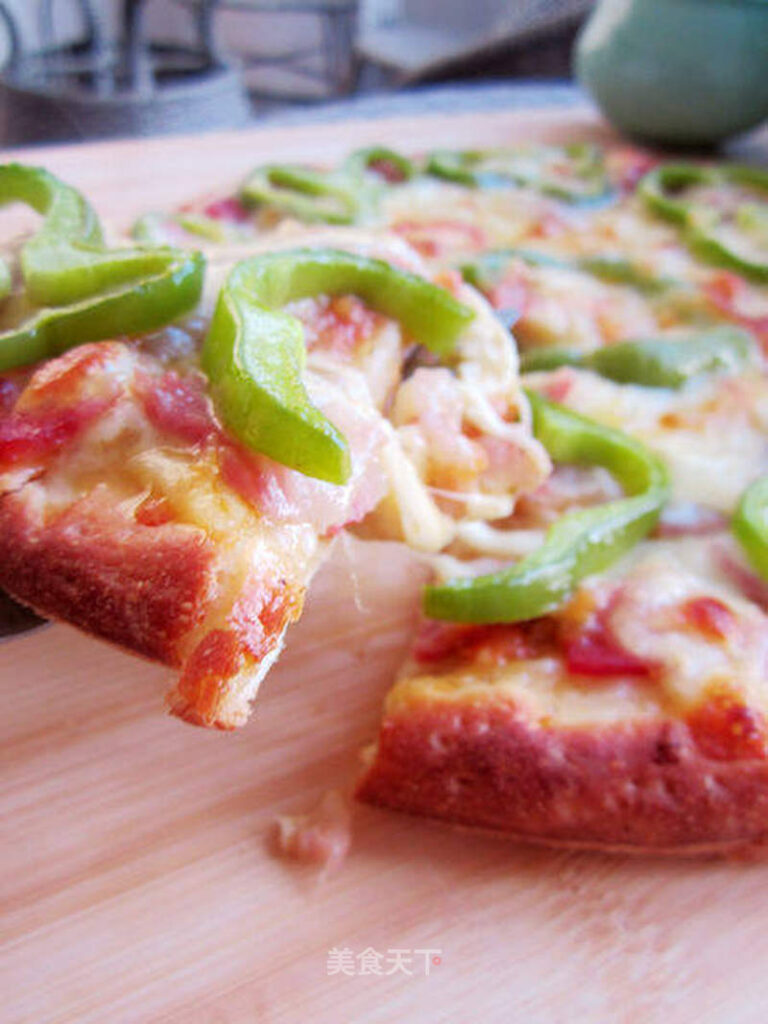
Salt appropriate amount Black pepper powder appropriate amount Oregano appropriate amount Basil leaves appropriate amount 1. Dissolve the yeast in warm water. Mix the flour with salt and olive oil. Gradually add the yeast water to the mixture and knead into a uniform, smooth dough. 2. Place the kneaded dough in a container and cover the surface with plastic wrap. Set it in a warm, humid place. When the dough has risen to twice its original size, take it out. Divide the dough into two equal portions, roll each into a round ball, cover with plastic wrap, and let rest at room temperature for 15 minutes. 3. While waiting for the dough to rise, prepare the pizza sauce. Finely chop the tomatoes and onions, and mince the garlic cloves.After melting butter in a pan, add minced garlic and onion, sauté until fragrant. Add tomatoes and stir-fry, then season with salt, black pepper, basil, and oregano once the tomatoes soften. Continue stirring until the mixture thickens into a rich sauce, then turn off the heat. Flatten the dough and roll it into a circle the size of the pizza pan. Place the pizza dough into the pan, and evenly poke small holes all over the surface with a fork. Evenly spread a layer of pizza sauce over the dough with a spoon, and sprinkle some mozzarella cheese. Evenly arrange bacon slices on top of the dough. Add another layer of cheese, and arrange green pepper rings on top. Sprinkle one final layer of cheese. Place the pizza pan on a baking tray or rack, and bake in a preheated oven at 200°C (392°F) with both top and bottom heat for about 20 minutes, or until the cheese surface turns golden brown. Remove and serve.
Getting the Sauce to the Right Thickness
The sauce is ready when a spoon dragged across the pan bottom leaves a trail that closes slowly, which usually takes 15-20 minutes of simmering. Stop too early and it soaks into the rolled dough; cook it too long and it turns into a paste that dries out under a full 20 minutes in the oven. If you overshoot, stir in a splash of water off the heat. A batch this size keeps three or four days in the fridge and freezes well in small portions for future pizzas.
Common Dough Pitfalls
- Water that feels warmly tepid to a finger, never hot, is what activates the yeast; scalding water kills it before the flour is even mixed in.
- Keep the salt with the flour rather than pouring it straight onto the yeast water, since direct contact slows the rise.
- Respect the 15-minute rest after dividing. Rolling straight away makes the dough shrink into a small oval instead of holding the circle you shaped.
- Fork the holes right across the surface, not only the middle, or the edges bubble up and push the sauce and cheese inward.
Freezer and Reheat Notes
Chilled slices come back well on a rack at 180°C (356°F) for 6-8 minutes, long enough for the base to firm up again. For longer keeping, wrap cooled slices individually and freeze for up to a month, then bake from frozen at 200°C (392°F) for about 10 minutes. A fully assembled unbaked pizza also freezes well on its pan; once solid, wrap it and add roughly five extra minutes to the bake, straight from the freezer with no thawing.